Summary
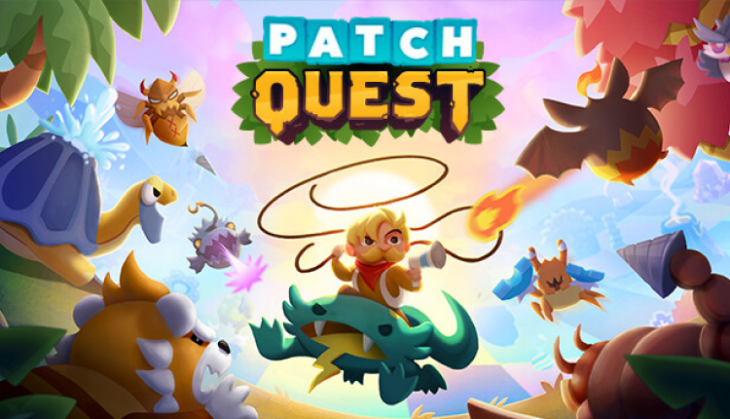
Smashing rogue-lite bullet hells, Metroidvania mapping, and Pokémon-style monster catching into a single game sounds like a recipe for a bloated disaster. Yet, against all odds, Patch Quest pulls it off. Lassoing a bizarre beast and instantly hopping on its back to spit elemental juice at incoming screens of neon projectiles is pure, chaotic fun. The loop of mapping out this shifting patchwork island is incredibly addictive. Just be ready for some serious frustration; the difficulty spikes can feel totally unfair, and some monster designs get reused way too quickly. Still, if you have the reflexes for it, it's one of the most refreshing indies in years.
Story
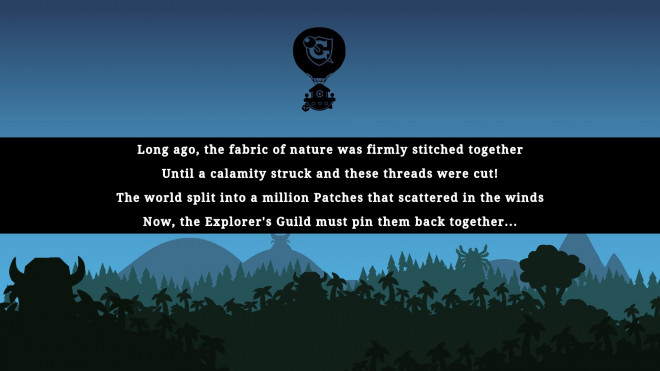
The narrative is lightweight but charming. You play as a tiny explorer sent to investigate Patchlantis, an ancient, shattered island reclaimed by nature and overrun by wild monsters. Your job is to explore the ruins, log the local wildlife, and figure out exactly why this lost civilization collapsed in the first place. It’s mostly told through quiet environmental storytelling, lost artifacts, and logbook entries. It doesn't get in the way of the action, keeping the focus entirely on the thrill of the safari.
Graphics
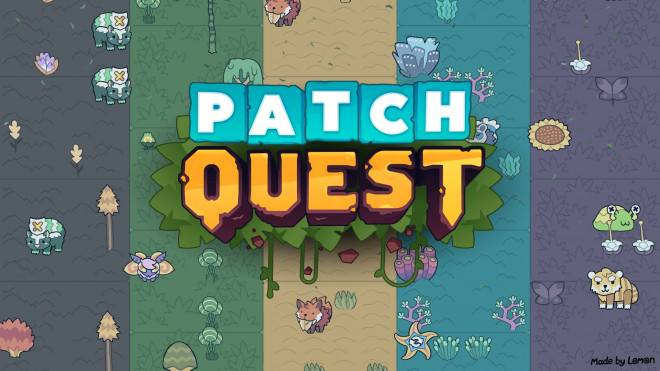
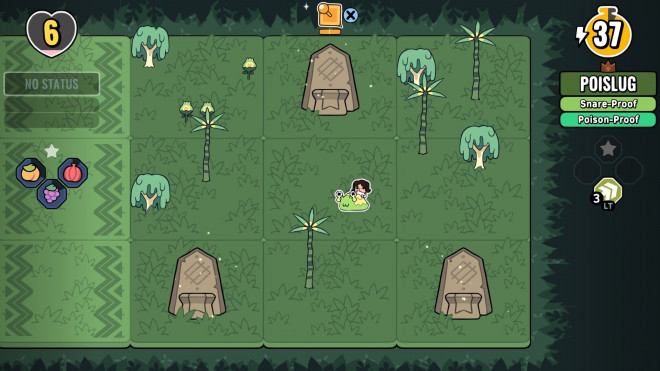
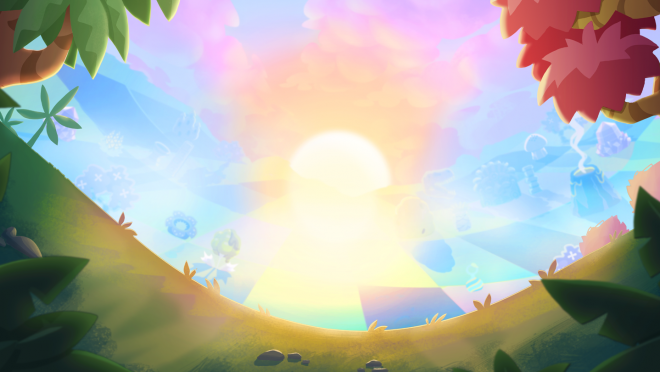
The visuals are easily one of the game's biggest selling points. The art style feels like a handcrafted papercraft world, full of chunky lines, soft colors, and incredibly expressive monster animations. The screen is always exploding with bright pastel colors and neon bullet grids. It manages to look cute and clean without sacrificing visual clarity, which is crucial when you are trying to track dozens of moving projectiles at once.
Audio
The soundtrack is upbeat, whimsical, and fits the colorful exploration vibe perfectly. The music changes dynamically depending on the biome you're currently in, keeping things fresh. However, the weapon and impact sound effects lack a bit of weight. Splatting fruit ammo against a giant monster should feel punchy, but it often sounds like throwing wet sponges at a wall.
Gameplay
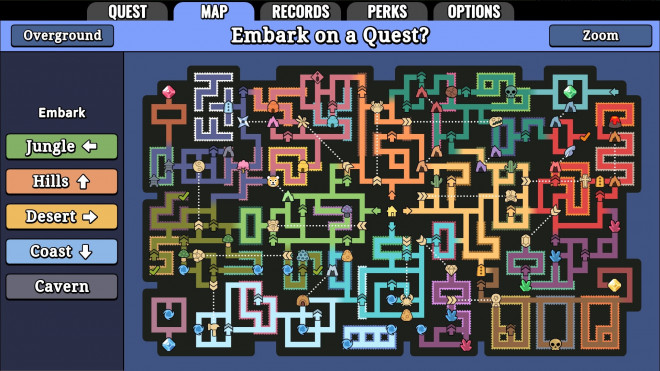
Patch Quest plays like a top-down twin-stick shooter, but with a massive catch: you are almost never on foot. You start with a basic lasso and must capture a wild beast to ride. Once mounted, that beast's health bar, movement skills, and attacks become your own. You shoot elemental ammo gathered from wild plants, using "ammo smoothies" to trigger devastating status effects. The gameplay is a constant, frantic cycle of riding a monster until its health is depleted, desperately dodging bullets on foot, lassoing a new moun, and jumping back into the fray. It’s fast, highly mechanical, and deeply satisfying.
Multiplayer
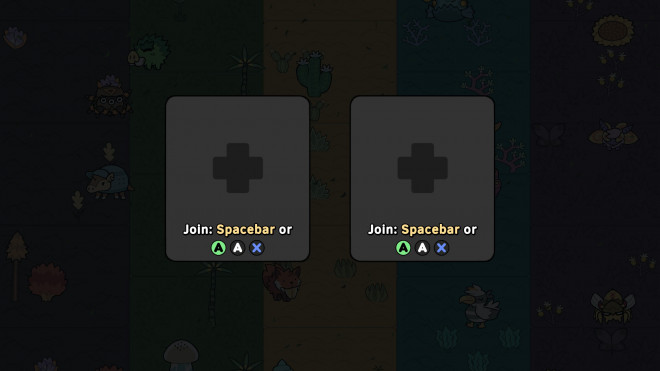
The game features Local Co-op (Shared/Split Screen) for two players, but lacks any native online multiplayer support. Playing with a friend turns the bullet-hell chaos up to eleven. Working together to lasso giant monsters or sharing rare mounts is a ton of fun, though the single-screen camera can make coordination difficult when the screen gets flooded with projectiles.
Dumb Things About the Game
- Lassoing Under Pressure: Trying to spin a lasso in a circle to tame a beast while an angry boss is shooting a wall of fireballs at your face is the video game equivalent of rubbing your stomach and patting your head.
- The "One-Hit-Point" Foot Sprint: When your monster dies, you are left running around on foot with virtually no defense. Watching your cute little explorer desperately sprint away from giant, roaring beasts is both hilarious and terrifying.
- Friendly Fire Panic: Because the screen gets so cluttered, you will regularly waste ammo shooting at your own tamed pets or panic-dodge your co-op partner’s friendly projectiles.
- The Gluttonous Explorer: Your character can apparently carry dozens of giant elemental fruits, a massive research logbook, and multiple camping decorations, but a single hit from a floating bubble sends them flying across the screen.
- The Great Escape Clones: Capturing a rare, cool-looking monster only to realize its attacks are exactly the same as the common swamp frog you rode five minutes ago is a major buzzkill.

AUTHOR INFORMATION


 Wrangling creatures on the fly and immediately using their unique attacks is an absolute blast. It makes every fight feel dynamic because you're constantly changing your ride.
 The shooting mechanics are tight, but the bullet patterns can get so dense that they crowd out the fun of exploring, transforming a relaxed collect-a-thon into a sweaty arcade shooter.
 The metroidvania layout is clever. Unlocking shortcuts, collecting plants, and slowly mapping out the island feels incredibly rewarding and gives a real sense of adventure.
 Keeping your captured monsters as pets at your camp is a great concept, but unlocking enough decorations and plants to make them happy can turn into a tedious grind.
While there are over 50 species to find, many of the mid-tier monsters feel like simple elemental recolors that share the exact same attack animations.
PROS / CONS
- Endlessly Addictive Loop: The "just one more run" hook is incredibly strong. You are always unlocking a new shortcut, finding a rare plant, or capturing a creature you haven't seen before.
- Brilliant Traversal Mechanics: Riding monsters isn't just for combat; their unique movement abilities—like gliding, tunneling, or webslinging—are genuinely fun to use to navigate the map.
- Lovely Papercraft Visuals: The hand-drawn aesthetic is gorgeous. It looks like a vibrant, pop-up storybook, which makes exploring the different biomes feel highly inviting.
- Highly Rewarding Discovery: The game leaves you to figure out most of the item interactions and creature affinities on your own, which makes finding a new combo feel like a personal achievement.
- Great Steam Deck Performance: It runs like an absolute dream on portable hardware, making it the perfect game to pick up for quick, 20-minute runs.
- Severe Difficulty Spikes: The deeper you go into a run, the more the enemy damage scales out of control. It often feels like the game forces you to die rather than letting you win through pure skill.
- Chaotic Control Scheme: Trying to precisely aim your lasso while dodging fifty glowing bullets and navigating platforms can lead to frequent, frustrating controller-fumbling.
- Repetitive Biomes: Despite the shifting "patchwork" nature of the maze, the individual tile layouts start to repeat very quickly, making late-game exploration feel slightly repetitive.
- Shallow Boss Encounters: Most bosses rely on spamming the screen with giant projectile grids rather than offering interesting mechanics, turning major fights into tedious survival tests.
- Co-op Camera Issues: The local co-op is a great addition, but the camera struggles to keep both players in view during hectic bullet-hell fights, often leading to cheap deaths off-screen.