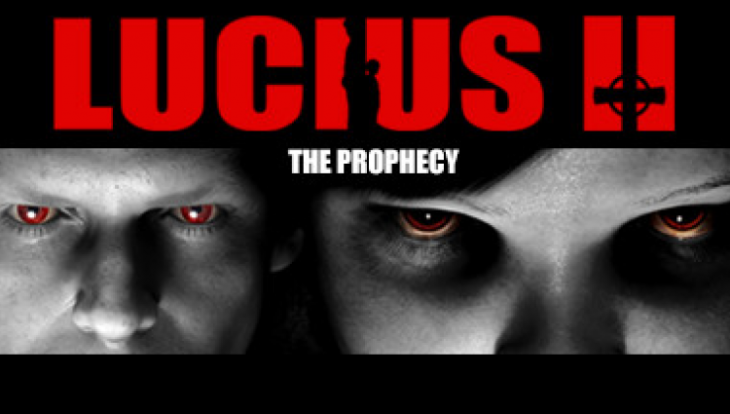
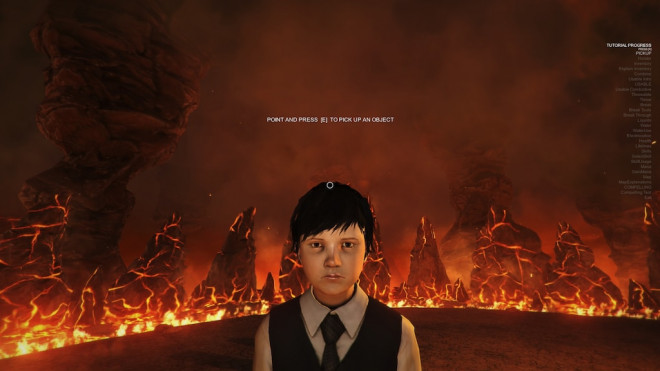
Story The story picks up immediately after the events of the first game. Lucius has survived the fire at Dante Manor and is taken to the psychiatric ward of St. Benedict’s Hospital. The narrative follows his journey to reclaim his powers and fulfill the prophecy of his father, Lucifer. While the setup is great for a horror fan, the delivery is mostly through static cutscenes and notes. It feels less like a cinematic experience and more like a series of excuses to move Lucius from one high-casualty location to the next.
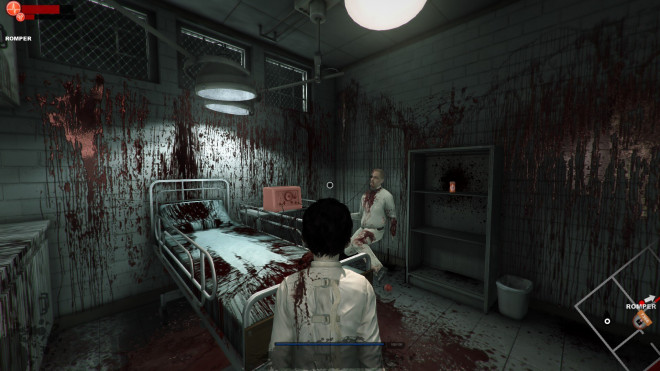
Graphics The visuals are a mixed bag. The lighting and shadows create a decent "creepy hospital" vibe, but the character models look dated and stiff. The animations are particularly janky—seeing Lucius "run" looks more like he’s gliding awkwardly over the floor. However, the environmental detail is high; every room is packed with objects you can pick up, throw, or sabotage, which is vital for the gameplay.
Audio The audio is the weakest link. The music is atmospheric but forgettable, and the voice acting ranges from "fine" to "unintentionally hilarious." The sound effects for your powers lack the punch you’d expect from the Son of Satan. Lighting someone on fire should sound terrifying; here, it sounds like a wet match.
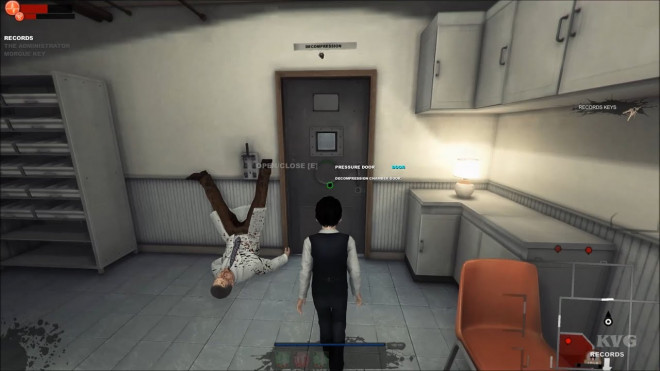
Gameplay Lucius II is a 3rd-person stealth sandbox. Unlike the first game, which was a point-and-click adventure, this is an action-strategy game. You have a "Social Stealth" meter—if you’re seen doing something "weird" (like carrying a canister of acid), people will get suspicious. You spend most of your time sneaking through restricted areas, looting chemicals to craft poisons, and using your demonic powers to manipulate the environment. It requires a lot of patience and a high tolerance for trial-and-error.
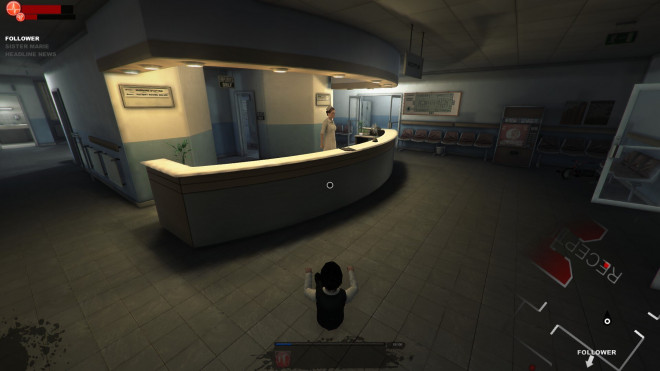
Dumb Things About the Game
- The "Invisible" Lucius: Sometimes you can stand right in front of an NPC while holding a severed head, and they won't react as long as you aren't in a "restricted zone."
- Gravity is Optional: Seeing a dead body float slowly toward the ceiling or a chair vibrate until it explodes is a common, immersion-breaking occurrence.
- The "Magic" Pockets: Lucius can apparently carry five gallons of gasoline, three boxes of donuts, and a car battery in his tiny shorts without slowing down.
- Self-Harm AI: NPCs have a bizarre habit of walking into hazards you haven't even activated yet, effectively committing suicide before you can even "murder" them.
- The Skill Tree Reset: If you don't save manually and the game crashes (which it will), you might lose a chunk of your carefully earned "darkness" points.

AUTHOR INFORMATION


 The shift to open-ended levels is a huge improvement. You aren't just looking for the one "correct" way to kill a target; you’re looking for any way to do it.
 The RPG elements are surprisingly deep. Investing points into different branches of the Prophecy allows you to customize Lucius into a mind-controlling puppet master or a straight-up fire starter.
 While the physics engine allows for creative kills, it is incredibly unstable. Objects vibrate, fly across the room for no reason, and often ruin a carefully planned "accident."
The game leans hard into its 70s/80s horror movie tropes. The atmosphere is grim, the gore is over-the-top, and the dark humor is present if you look for it.
 Even years after release, the game feels unfinished. Frequent crashes, broken scripts, and floating NPCs are part of the "standard" experience.
PROS / CONS
- True Creative Freedom: You can poison donuts, rig electrical sockets, or simply toss a fire extinguisher into a crowded room. The "how" is finally up to you.
- Massive Level Scale: The hospital and the town of Ludlow are huge, filled with vents, secret passages, and hundreds of interactable items.
- Deep Progression: The ability to level up Lucius and choose which demonic powers to prioritize adds a layer of strategy missing from the first game.
- Hilariously Brutal Kills: Some of the traps you can set are genuinely clever and satisfying to watch when they actually work.
- Low System Requirements: Despite the physics engine, it runs on almost any modern PC, making it accessible to a wide range of "aspiring demons."
- Game-Breaking Bugs: Expect to restart levels because a key item fell through the floor or a target got stuck in a wall.
- Lobotomized AI: NPCs will often walk directly into a fire you just lit or ignore the fact that their coworker just exploded three feet away.
- Finicky Controls: Moving objects with telekinesis feels floaty and imprecise, making it difficult to position traps exactly where you want them.
- Repetitive Mission Structure: Despite the sandbox nature, the loop of "enter area, kill X number of people, move to next area" can get stale by hour four.
- Underwhelming Sound Design: Aside from the occasional scream, the audio feels hollow. The voice acting is stiff, and the environmental sounds are minimal.