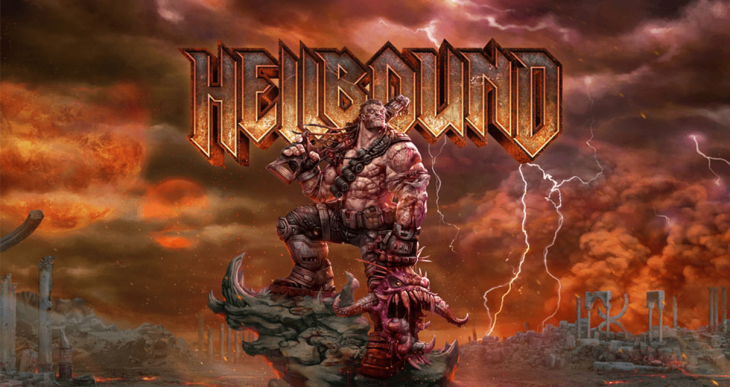
Today I want to talk about Hellbound, a game that openly drinks from the Doom saga and mixes mechanics from both the classic and the modern entries. The combat, the visual tone, the pacing and even parts of the story feel like a brutal tribute to id Software’s work. And before getting into anything else, I need to say this: the game runs beautifully on Steam Deck. Smooth performance, no noticeable drops at any point, and a fluidity that makes the carnage extremely enjoyable even when the difficulty starts punching you in the face.
The developers clearly knew they were making a tough game, because checkpoint placement is surprisingly generous. That softness behind the cruelty shows they understood that Hellbound is going to knock players around, and they chose not to make the punishment unbearable.
Still, I encountered a few sections (especially in level two) where the difficulty spikes were borderline absurd. Running out of ammo and being forced to rely on melee is one of those moments where the tension skyrockets. Sure, you can kill some demons with a single hit, but they can also turn you into paste just as quickly. That constant push-and-pull between empowerment and fragility defines the experience.
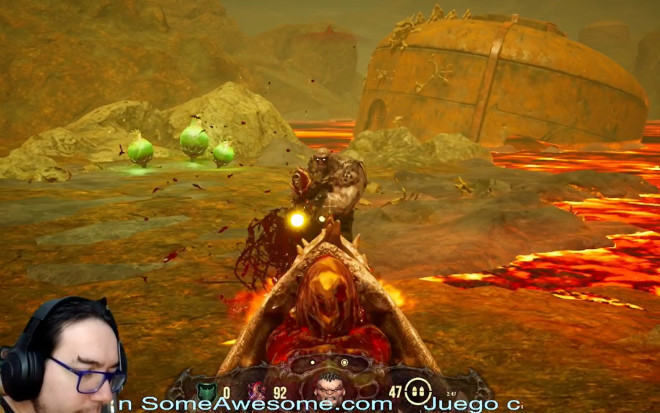
Hellbound is not a game you go into expecting originality. The aesthetic, the gameplay loops, the aggressive metal soundtrack, the infernal environments, the demon designs and even the pacing all echo Doom heavily. But despite that, the game has a certain charm. There’s something satisfying about how unapologetically it embraces its influences, and the baseline difficulty can easily rival the harder settings of the modern Doom titles. The developers clearly intended this to be a homage that doesn’t just copy the formula, but tests the reflexes and patience of even the most seasoned shooter fans.
Casual players will probably find Hellbound harsh and unforgiving. The enemies hit hard, the arenas can feel claustrophobic, and the combat rhythm demands constant awareness. But if you enjoy shooters that throw you into the fire and expect you to claw your way out, this one might scratch that itch.
As I said, on Steam Deck the performance is excellent, and the controls feel tight and responsive. The visuals go all-in on the hellish theme: imposing demons, muscular brutes sprinting at you with bats or firearms, blazing environments, and aggressive lighting that makes everything feel hostile. When two or three heavy demons rush your position, it really makes you reconsider whether advancing is a smart idea. More than once I had to backtrack into previous rooms, use door frames as makeshift shields and shoot from cover to avoid being overwhelmed.
The soundtrack hits hard from the very beginning. Fast, pounding, aggressive, perfectly tuned to the constant chaos. The pacing of the music and the combat match so well that your adrenaline rises almost automatically, even during brief quiet moments.
It’s entertaining, challenging, and often intense to the point of excess. Whether that’s a good thing or not depends entirely on the kind of player you are. Hellbound knows exactly what it is: fast, angry, loud and merciless.
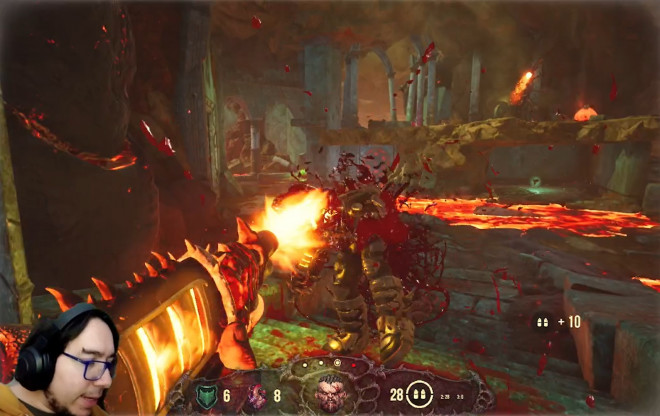
Hellbound is a fierce, no-nonsense shooter built for players who enjoy being pushed around by monstrous hordes and punished for every mistake. It’s loud, intense and not ashamed of its influences. If you’re looking for something closer to the modern Doom experience, but with a more indie, raw flavor, this might be exactly your thing.
But if you’re not into overwhelming difficulty or games that expect fast reflexes and constant awareness, then Hellbound will not be kind to you. It’s fun, it’s vicious, and it’s absolutely relentless, so it’s up to you to decide whether that sounds appealing or like a trip straight to frustration.
In the end, Hellbound is a game built for those who crave adrenaline, who enjoy tearing through demonic hordes with loud, aggressive music thundering in the background. It is entertaining, brutal, demanding and at times undeniably excessive. You will die often, and the game knows it. That is why the checkpoints are plentiful, almost as if the developers were whispering a quiet apology before throwing you into the next infernal gauntlet. If crushing difficulty is your home territory, you will feel right at ease. If not, this descent into hell may be better left for another day.

AUTHOR INFORMATION


 A savage, Doom-inspired shooter built around fast movement, heavy gunplay and brutal difficulty spikes. Ammo scarcity forces you to switch strategies often, making melee encounters risky but sometimes necessary. Checkpoints are frequent, which softens the otherwise punishing challenge.
 Everything screams “hellfire and chaos.” The environments are drenched in infernal reds and blacks, the demons are bulky and intimidating, and the action is constantly explosive. Despite the roughness of some textures, the overall visual identity is strong and aggressive.
 A high-energy metal soundtrack that perfectly complements the frantic combat. Loud, fast and relentless, it keeps the adrenaline pumping from start to finish.
Runs flawlessly. No frame drops, no stutters, smooth input and a very responsive feel. You don’t need any tweaks or Proton changes, just launch and enjoy. Replayability moderate to high. The difficulty encourages mastering each encounter, and players who enjoy high-intensity shooters will likely revisit it to improve their runs.
 The narrative serves mainly as a functional backdrop: demons, hellish landscapes and a protagonist thrown into a brutal fight for survival. It mirrors the minimalist storytelling of classic shooters, where the plot exists only to justify the carnage.
PROS / CONS
- Excellent performance on Steam Deck.
- Fast, brutal, satisfying gunplay.
- Heavy metal soundtrack that fits the action perfectly.
- Checkpoints make the difficulty more manageable.
- Strong hellish visual identity.
- Difficulty spikes can feel excessive.
- Very derivative of Doom, offering little originality in story, design or aesthetic direction
- Melee reliance when out of ammo can be frustrating.
- Not friendly for casual players.